Studio Village Hototoguis 2007-2022
Matsuyama in Ehime is the birthplace of haiku, and to this day, haiku submission boxes are placed around town. Young people gather in a haiku society-like manner. In other words, they observe and contemplate well, but their approach is generally instant, casual, and somewhat careless. There is a local disposition here, which they call “yomoda” in the dialect —a blend of humour and sadness. It’s as if they pretend to agree to demands in a laid-back way, all while delaying the big decision. It’s a matter related to the moment and ethics.
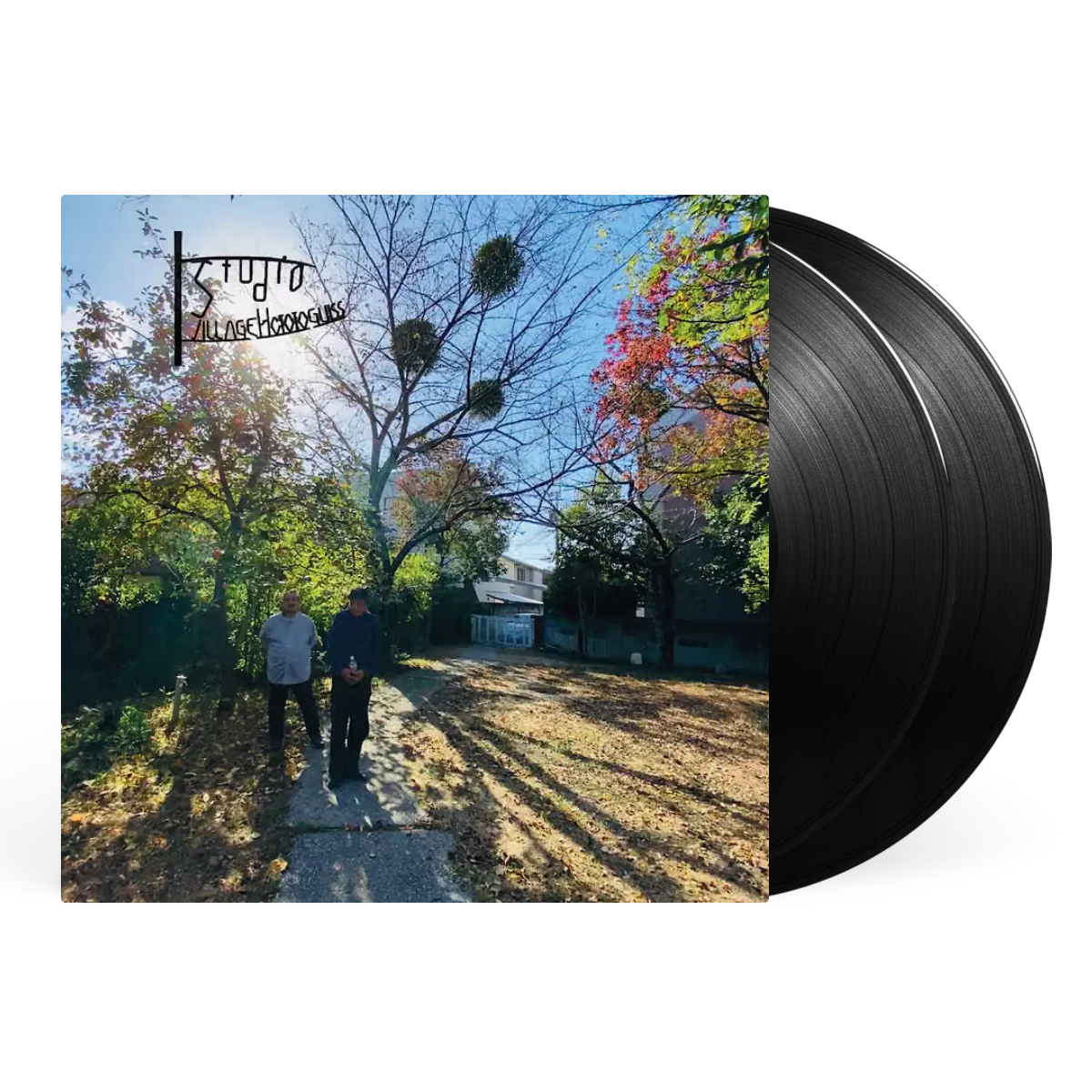
Near the famous Dogo Onsen is Studio Village Hototogisu, named after the magazine Hototogisu started by Masaoka Shiki, the father of haiku. The studio was once a large psychiatric hospital, which Mr. Tsuru, the owner, completely remodelled, turning the third floor into his music studio. Tsuru-san is both a psychiatrist and an avid enthusiast of classic rock. He’s a broad-minded adult who also accepts my type of music. About once or twice a month, I randomly select an instrument or device from his vast collection, gathers whoever happens to be around, usually his family, and in about two hours, we record and mix a piece. This album is a compilation of those recordings. The album label is designed after Matsuyama’s specialty confection, “Ichiroku Tart.”
From around the time of the pandemic, I started layering his dobro guitar or mandolin over my tracks on purpose. The mainstream and the fringe—once opposing camps—merged after this pandemic, a convergence in rock history that’s etched on side D of this album, reflecting the current global situation.
Could a society of free-verse haiku poets sharing both love and resentment for Matsuyama be possible?It’s a question that touches on the future course of nationalism. – Tori
Product Information
Product Information
Shipping & Returns
Shipping & Returns
Description
Matsuyama in Ehime is the birthplace of haiku, and to this day, haiku submission boxes are placed around town. Young people gather in a haiku society-like manner. In other words, they observe and contemplate well, but their approach is generally instant, casual, and somewhat careless. There is a local disposition here, which they call “yomoda” in the dialect —a blend of humour and sadness. It’s as if they pretend to agree to demands in a laid-back way, all while delaying the big decision. It’s a matter related to the moment and ethics.
Near the famous Dogo Onsen is Studio Village Hototogisu, named after the magazine Hototogisu started by Masaoka Shiki, the father of haiku. The studio was once a large psychiatric hospital, which Mr. Tsuru, the owner, completely remodelled, turning the third floor into his music studio. Tsuru-san is both a psychiatrist and an avid enthusiast of classic rock. He’s a broad-minded adult who also accepts my type of music. About once or twice a month, I randomly select an instrument or device from his vast collection, gathers whoever happens to be around, usually his family, and in about two hours, we record and mix a piece. This album is a compilation of those recordings. The album label is designed after Matsuyama’s specialty confection, “Ichiroku Tart.”
From around the time of the pandemic, I started layering his dobro guitar or mandolin over my tracks on purpose. The mainstream and the fringe—once opposing camps—merged after this pandemic, a convergence in rock history that’s etched on side D of this album, reflecting the current global situation.
Could a society of free-verse haiku poets sharing both love and resentment for Matsuyama be possible?It’s a question that touches on the future course of nationalism. – Tori