Quilt Floor
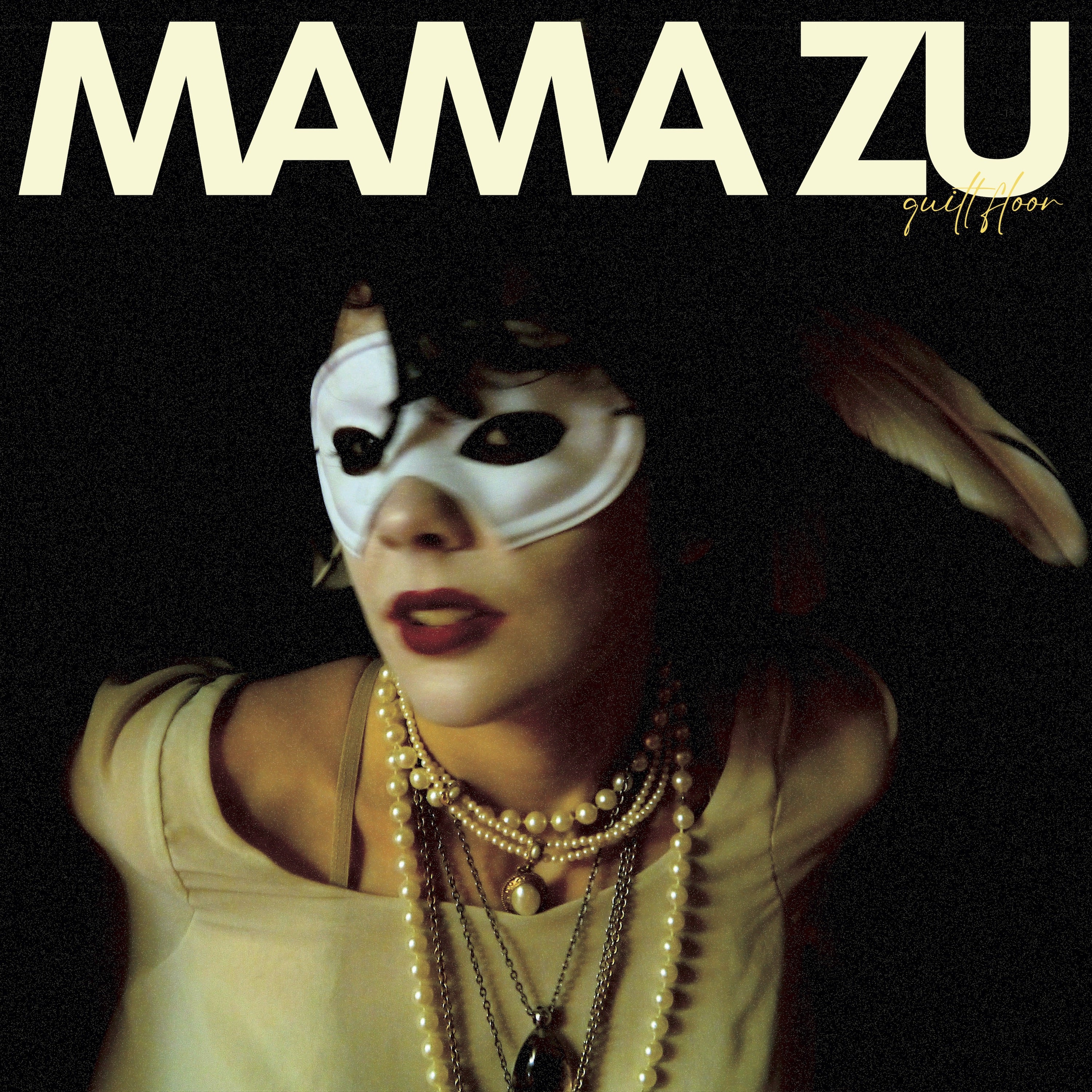
It was January 2016, in the middle of New York City’s biggest blizzard on record, when the Nashville rock-country band Those Darlins found themselves stranded in Brooklyn, trying in vain to finish their farewell tour. The group had spent ten years touring and recording together; it was time for something new. As the snow blanketed the East Coast, turning entire cities into crisp white silence, frontwoman Jessi Zazu and drummer Linwood Regensburg thought about their own blank slate in front of them. They had a plan: Take a month off, get some much-needed rest after this grueling run of gigs, then get straight back to work on a new album. The blank page never stayed blank for Jessi Zazu for very long; she was always relentlessly doing, bursting with ideas, whether she was painting or writing, mentoring young musicians in her community or leading grassroots activism initiatives. There were more songs to be sung, more notes to be played, more issues to shine a light on.But just as the pair were set to begin their next project, Zazu was diagnosed with cervical cancer, and the project was put on hold. When they returned to it in earnest that summer, after finding out that her cancer had spread, they believed that having a creative outlet again would help. “I don’t know if she felt the same way or not,” Regensburg says, “but watching this situation play out in my head, it was like I was equating it to some kind of hero journey. This person, who I believe to be invincible, overcomes a dire circumstance and the writing and recording of the music is all just part of the legendary comeback story. But that’s not what ended up happening, unfortunately.”A year after that snowstorm, as winter stretched into the spring and summer of 2017, Zazu and Regensburg would work under the moniker Mama Zu in fits and spurts, getting as much done as they could any time she felt well enough. When the pair first began collaborating, they had come up with a process of collaboration in which Zazu would send Regensburg a recording of lyrics she had written—sometimes in fragments, sometimes as a core of what the song would be—and he would build a demo around it. After she got sick, they found that the process synced with her treatment schedule. Zazu could send Regensburg a voice memo on a Monday, do chemo on a Tuesday, and in the following days that it took for her to recover, Regensburg could build a demo to send to her for feedback, ping-ponging back and forth until they felt they had enough to finish the tracks in the studio. By late summer, the pair had recorded and mixed an album to near-completion. Tragically, though, final work on the album was halted after Zazu passed away that September at the age of 28. The unfinished album was put back on the shelf. “After she died, I didn’t want to touch it,” Regensburg says. “I didn’t want to play the songs or listen to the songs, let alone finish them. It just seemed like such a daunting task with a lot of layers—there was a lot of work left to do, but then there was also this exhausting underlying emotional component that pops in and hangs around the moment I’d open a session.”Years passed. Distance grew. Healing began. By 2020, Regensburg felt ready to finish what they had started, he says, “both for her sake and for my own sanity level. I was the only person left with this project.” Working on their songs again was therapeutic, even if doing so brought on a new set of challenges as he both polished nearly-finished tracks and rebuilt songs out of disparate parts, from the drum track on an older, alternate recording to a simple phone demo. “It was a way of spending time with her, and kind of the only capacity in which I could,” he said. “But then, I was also left with a lot of creative choices without her. Even though I had played most of the instruments, it had still been a totally collaborative thing; if there was a part I played that she didn’t like, she was clear about that. If someone’s gone, you can still talk to them, but you can only assume what their feedback might be. So I was stuck with a lot of musical choices that I’d be working under the context of, I hope you like what I did here.”The resulting album, QUILT FLOOR, out February 23rd on Thirty Tigers, is bursting at the seams with life, ferocious and fierce. The glory of QUILT FLOOR is that there’s no note of sickness or sorrow to be found in it; where all of Zazu’s songwriting was personal, rather than turn inward, her gaze—even during her greatest battle—was fixed firmly on the world around her. Colored by the aftermath of a new era in America, a period in which many were both grieving and galvanized, Zazu’s songwriting has perhaps only grown more relevant as time has passed. Men who behaved badly are returning from their supposed exile. People have forgotten how to treat others with kindness; if we’re not the main characters of our own stories, we’re the background players of someone else’s content. It seems as if, at any given moment, part of the world is on fire. There’s plenty of fury to be had at the present, but what good is it without faith in the future’s potential for change? Rejoice! Our times are terrible, as the artist Jenny Holzer once proclaimed—an ethos Zazu had in spades.
Product Information
Product Information
Shipping & Returns
Shipping & Returns
Description
It was January 2016, in the middle of New York City’s biggest blizzard on record, when the Nashville rock-country band Those Darlins found themselves stranded in Brooklyn, trying in vain to finish their farewell tour. The group had spent ten years touring and recording together; it was time for something new. As the snow blanketed the East Coast, turning entire cities into crisp white silence, frontwoman Jessi Zazu and drummer Linwood Regensburg thought about their own blank slate in front of them. They had a plan: Take a month off, get some much-needed rest after this grueling run of gigs, then get straight back to work on a new album. The blank page never stayed blank for Jessi Zazu for very long; she was always relentlessly doing, bursting with ideas, whether she was painting or writing, mentoring young musicians in her community or leading grassroots activism initiatives. There were more songs to be sung, more notes to be played, more issues to shine a light on.But just as the pair were set to begin their next project, Zazu was diagnosed with cervical cancer, and the project was put on hold. When they returned to it in earnest that summer, after finding out that her cancer had spread, they believed that having a creative outlet again would help. “I don’t know if she felt the same way or not,” Regensburg says, “but watching this situation play out in my head, it was like I was equating it to some kind of hero journey. This person, who I believe to be invincible, overcomes a dire circumstance and the writing and recording of the music is all just part of the legendary comeback story. But that’s not what ended up happening, unfortunately.”A year after that snowstorm, as winter stretched into the spring and summer of 2017, Zazu and Regensburg would work under the moniker Mama Zu in fits and spurts, getting as much done as they could any time she felt well enough. When the pair first began collaborating, they had come up with a process of collaboration in which Zazu would send Regensburg a recording of lyrics she had written—sometimes in fragments, sometimes as a core of what the song would be—and he would build a demo around it. After she got sick, they found that the process synced with her treatment schedule. Zazu could send Regensburg a voice memo on a Monday, do chemo on a Tuesday, and in the following days that it took for her to recover, Regensburg could build a demo to send to her for feedback, ping-ponging back and forth until they felt they had enough to finish the tracks in the studio. By late summer, the pair had recorded and mixed an album to near-completion. Tragically, though, final work on the album was halted after Zazu passed away that September at the age of 28. The unfinished album was put back on the shelf. “After she died, I didn’t want to touch it,” Regensburg says. “I didn’t want to play the songs or listen to the songs, let alone finish them. It just seemed like such a daunting task with a lot of layers—there was a lot of work left to do, but then there was also this exhausting underlying emotional component that pops in and hangs around the moment I’d open a session.”Years passed. Distance grew. Healing began. By 2020, Regensburg felt ready to finish what they had started, he says, “both for her sake and for my own sanity level. I was the only person left with this project.” Working on their songs again was therapeutic, even if doing so brought on a new set of challenges as he both polished nearly-finished tracks and rebuilt songs out of disparate parts, from the drum track on an older, alternate recording to a simple phone demo. “It was a way of spending time with her, and kind of the only capacity in which I could,” he said. “But then, I was also left with a lot of creative choices without her. Even though I had played most of the instruments, it had still been a totally collaborative thing; if there was a part I played that she didn’t like, she was clear about that. If someone’s gone, you can still talk to them, but you can only assume what their feedback might be. So I was stuck with a lot of musical choices that I’d be working under the context of, I hope you like what I did here.”The resulting album, QUILT FLOOR, out February 23rd on Thirty Tigers, is bursting at the seams with life, ferocious and fierce. The glory of QUILT FLOOR is that there’s no note of sickness or sorrow to be found in it; where all of Zazu’s songwriting was personal, rather than turn inward, her gaze—even during her greatest battle—was fixed firmly on the world around her. Colored by the aftermath of a new era in America, a period in which many were both grieving and galvanized, Zazu’s songwriting has perhaps only grown more relevant as time has passed. Men who behaved badly are returning from their supposed exile. People have forgotten how to treat others with kindness; if we’re not the main characters of our own stories, we’re the background players of someone else’s content. It seems as if, at any given moment, part of the world is on fire. There’s plenty of fury to be had at the present, but what good is it without faith in the future’s potential for change? Rejoice! Our times are terrible, as the artist Jenny Holzer once proclaimed—an ethos Zazu had in spades.