Play Monk
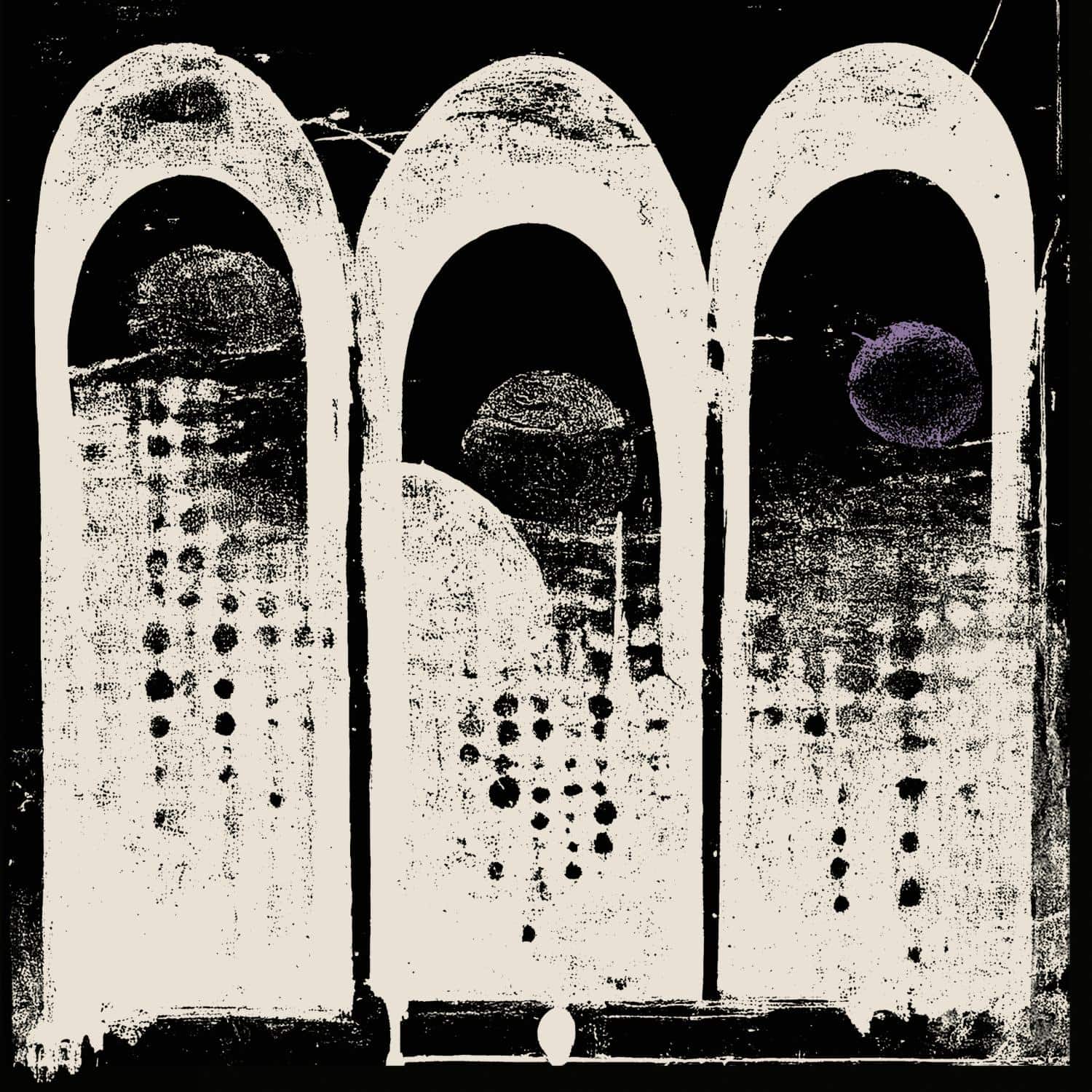
After 6 albums re-imagining the work of Ahmed Abdul-Malik, أحمد] Ahmed] turn to the material of Malik’s bandmate Thelonious Monk in the group's ongoing search for future music. Before going on to develop his own groundbreaking approach to jazz, Ahmed Abdul-Malik worked in Thelonious Monk’s late 1950’s quartets - appearing on seminal Monk recordings: Thelonious In Action (1958) and Misterioso (1958), and the more recently unearthed Thelonious Monk Quartet with John Coltrane at Carnegie Hall (2005). Abdul-Malik and Monk share a critical engagement with time - specifically in challenging its linear trajectory and offering sites and modes of synthesis and rupture instead. In their music, fragments of time are scattered and re-arranged in the present, an idea central too to the project of أحمد [Ahmed]. Over several decades, all four members of أحمد] Ahmed] have engaged with Monk’s standards in various individual and collective ways, but Play Monk, recorded in the same three-day London studio sessions as Sama’a (Audition), is the first released documentation of the group's versions of Monk’s music which began with a spontaneous interpretation of ‘Evidence’ in Novara, Italy, 2023. Across 2CDs, أحمد] Ahmed] atomize Monk’s ‘standards’ - transforming each composition into a shifting quantum time artifact. The melodic, harmonic, rhythmic and spatial gestures of each piece become complex vernacular forms, creating a dialogue in time and a (red)shifting lens through which to view our material present. Into the fissures of Monk’s form, أحمد] Ahmed] pour their own play - colliding and dancing with Duke Ellington, Cecil Taylor, Caribbean diasporic music, European improvisation and Jah Shaka in their pursuit of future music. “Monk’s music is not played so much as grasped, condensed and catapulted through the vagaries of time,” writes Fielding Hope. “Monk famously used to dance in circles. In flight from the numerical bind, أحمد] Ahmed] make music that sounds like it could float on forever.”
Original: $37.41
-65%$37.41
$13.09Product Information
Product Information
Shipping & Returns
Shipping & Returns
Description
After 6 albums re-imagining the work of Ahmed Abdul-Malik, أحمد] Ahmed] turn to the material of Malik’s bandmate Thelonious Monk in the group's ongoing search for future music. Before going on to develop his own groundbreaking approach to jazz, Ahmed Abdul-Malik worked in Thelonious Monk’s late 1950’s quartets - appearing on seminal Monk recordings: Thelonious In Action (1958) and Misterioso (1958), and the more recently unearthed Thelonious Monk Quartet with John Coltrane at Carnegie Hall (2005). Abdul-Malik and Monk share a critical engagement with time - specifically in challenging its linear trajectory and offering sites and modes of synthesis and rupture instead. In their music, fragments of time are scattered and re-arranged in the present, an idea central too to the project of أحمد [Ahmed]. Over several decades, all four members of أحمد] Ahmed] have engaged with Monk’s standards in various individual and collective ways, but Play Monk, recorded in the same three-day London studio sessions as Sama’a (Audition), is the first released documentation of the group's versions of Monk’s music which began with a spontaneous interpretation of ‘Evidence’ in Novara, Italy, 2023. Across 2CDs, أحمد] Ahmed] atomize Monk’s ‘standards’ - transforming each composition into a shifting quantum time artifact. The melodic, harmonic, rhythmic and spatial gestures of each piece become complex vernacular forms, creating a dialogue in time and a (red)shifting lens through which to view our material present. Into the fissures of Monk’s form, أحمد] Ahmed] pour their own play - colliding and dancing with Duke Ellington, Cecil Taylor, Caribbean diasporic music, European improvisation and Jah Shaka in their pursuit of future music. “Monk’s music is not played so much as grasped, condensed and catapulted through the vagaries of time,” writes Fielding Hope. “Monk famously used to dance in circles. In flight from the numerical bind, أحمد] Ahmed] make music that sounds like it could float on forever.”