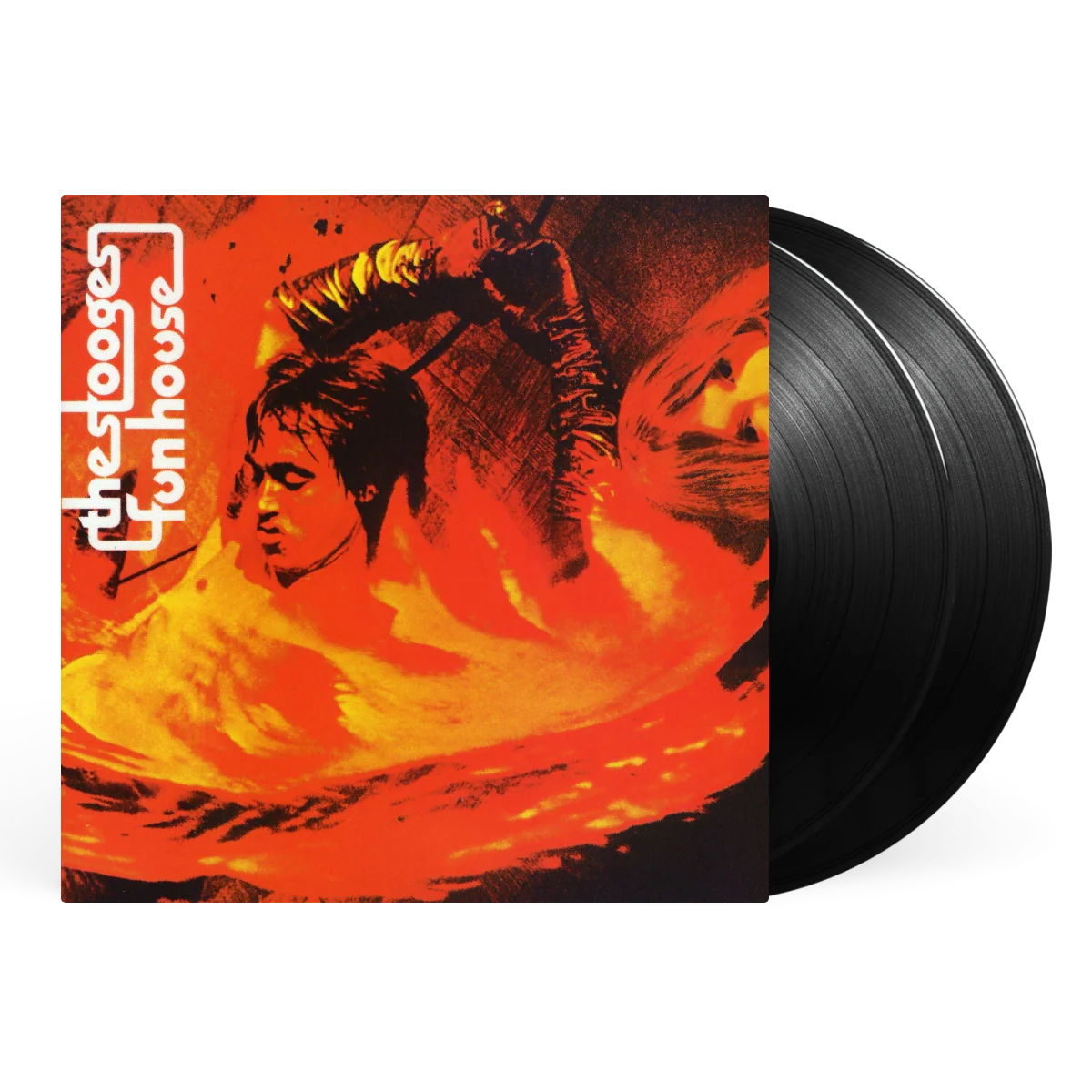

Fun House (Mobile Fidelity Pressing)
This is a record on which unabandoned feeling takes precedence, primal energy surges to the fore, outsider attitude snarls with destructive force, electrifying chaos assumes the form of wild joyousness — all of which might very well be impossible to put into words. Legendary Village Voice journalist Robert Christgau even admitted “language wasn’t designed for the job” of conveying what many critics and artists believe to be the ultimate rock ‘n’ roll statement.
Sourced from the original master tapes, pressed at Fidelity Record Pressing in California, and housed in a Stoughton gatefold jacket, Mobile Fidelity’s numbered-edition 180g 45RPM 2LP set marks the first time this 1970 landmark is available at 45RPM speed. This definitive-sounding copy benefits from the extra groove space by playing with enhanced definition, greater emotionalism, and more realistic ambience than prior versions.
From beginning to end, the live-in-the-room characteristics and sudden mayhem closely identified with Fun House and Don Gallucci’s esteemed production — the unrelenting sense of groove; the sheer impact of the rhythms; the bleed of the unmuted volumes; the ferocity of Pop’s heat-seeking vocals; the bruising churn of the low end; the grit, grime, and grind of four dudes and auxiliary saxophonist Steven Mackay bent on breaking into another dimension — emerge with gripping presence, body, and power. The Stooges’ most controlled, focused, and hot-wired creation, Fun House now adopts the sonic vigor of the atom bomb or hydroelectric plant to which Christgau thought of comparing it.
Intense, cohesive, and aggressive, Fun House differs from and improves upon the Stooges’ groundbreaking debut in several ways. For starters, the quartet developed nearly all of the songs that ended up on the record over the course of several months of shows they performed on the weekends. They weren’t under pressure to write additional material once the sessions commenced — a circumstance that led to on-the-spot songs such as “Not Right” and “Little Doll” on their self-titled set. Just as importantly, they were matched with Gallucci, whose pedigree as an organist on the Kingsmen’s “Louie Louie” and television credits as a member of Dick Clark’s house band in Don and the Good Times immediately endeared him to the band.
The Stooges’ instinctive faith in Gallucci paid immediate dividends. In tune with the fact the Stooges’ managed the equivalent of bottling lightning at their distinctive shows, Gallucci sought to capture their concert vibe. He thwarted convention and removed all the drapes, carpeting, and other vibration-deadening accoutrements from Elektra Sound Recorders — the studio just a short stroll away from the group’s temporary digs at Tropicana Motel. He also let Pop sing, grunt, shout, and bark in live fashion via a hand-held microphone sent through two Marshall amplifiers that served as his personal PA system. Engineer Brian Ross-Myring was the final piece to what became a recording for the ages.
Gallucci and Ross-Myring had another brilliant idea when they planned to have the Stooges knock out one tune in the studio per day in an order that would mirror the sequence on the record. First, they invited the band to run through the songs on what essentially functioned as a preparation day during which levels, baffles, and positions would be dialed in. Then, they got down to business, achieving the goal of nailing down a song each day and providing Gallucci roughly between 15 and 25 takes of each to choose for the official version. Reportedly, aside from two guitar overdubs, every note of Fun House transpired as you hear it today.
That goes for the relentless riffing of guitarist Ron Asheton, corrosive pounding of drummer Scott Asheton, sinewy swaying of bassist Dave Alexander, blustery howling of Pop, and untamed, nearly stream-of-conscious blaring of Mackay. Plucked from his job at a record store in Michigan just two days before the sessions began, the young saxophonist helped push the Stooges to avant galaxies no artist ever visited on “1970,” the title track, and “L.A. Blues,” the latter an attempt by Gallucci to chronicle the Stooges’ famed concert-ending freak-outs. To get in the proper frame of mind, the band dropped acid and let fly.
Often imitated and never duplicated, the results continue to melt minds more than 50 years after Pop and company got loose. Ranked the 94th greatest album of all time by Rolling Stone, said to be “the greatest rock ‘n’ roll album ever made” by Jack White, and championed by everyone from vaunted critics such as Lester Bangs and Ben Edmonds to musicians like Henry Rollins and Steve Albini, Fun House feels alright. It’s gonna stick you deep inside.
Original: $86.85
-65%$86.85
$30.40Product Information
Product Information
Shipping & Returns
Shipping & Returns
Description
This is a record on which unabandoned feeling takes precedence, primal energy surges to the fore, outsider attitude snarls with destructive force, electrifying chaos assumes the form of wild joyousness — all of which might very well be impossible to put into words. Legendary Village Voice journalist Robert Christgau even admitted “language wasn’t designed for the job” of conveying what many critics and artists believe to be the ultimate rock ‘n’ roll statement.
Sourced from the original master tapes, pressed at Fidelity Record Pressing in California, and housed in a Stoughton gatefold jacket, Mobile Fidelity’s numbered-edition 180g 45RPM 2LP set marks the first time this 1970 landmark is available at 45RPM speed. This definitive-sounding copy benefits from the extra groove space by playing with enhanced definition, greater emotionalism, and more realistic ambience than prior versions.
From beginning to end, the live-in-the-room characteristics and sudden mayhem closely identified with Fun House and Don Gallucci’s esteemed production — the unrelenting sense of groove; the sheer impact of the rhythms; the bleed of the unmuted volumes; the ferocity of Pop’s heat-seeking vocals; the bruising churn of the low end; the grit, grime, and grind of four dudes and auxiliary saxophonist Steven Mackay bent on breaking into another dimension — emerge with gripping presence, body, and power. The Stooges’ most controlled, focused, and hot-wired creation, Fun House now adopts the sonic vigor of the atom bomb or hydroelectric plant to which Christgau thought of comparing it.
Intense, cohesive, and aggressive, Fun House differs from and improves upon the Stooges’ groundbreaking debut in several ways. For starters, the quartet developed nearly all of the songs that ended up on the record over the course of several months of shows they performed on the weekends. They weren’t under pressure to write additional material once the sessions commenced — a circumstance that led to on-the-spot songs such as “Not Right” and “Little Doll” on their self-titled set. Just as importantly, they were matched with Gallucci, whose pedigree as an organist on the Kingsmen’s “Louie Louie” and television credits as a member of Dick Clark’s house band in Don and the Good Times immediately endeared him to the band.
The Stooges’ instinctive faith in Gallucci paid immediate dividends. In tune with the fact the Stooges’ managed the equivalent of bottling lightning at their distinctive shows, Gallucci sought to capture their concert vibe. He thwarted convention and removed all the drapes, carpeting, and other vibration-deadening accoutrements from Elektra Sound Recorders — the studio just a short stroll away from the group’s temporary digs at Tropicana Motel. He also let Pop sing, grunt, shout, and bark in live fashion via a hand-held microphone sent through two Marshall amplifiers that served as his personal PA system. Engineer Brian Ross-Myring was the final piece to what became a recording for the ages.
Gallucci and Ross-Myring had another brilliant idea when they planned to have the Stooges knock out one tune in the studio per day in an order that would mirror the sequence on the record. First, they invited the band to run through the songs on what essentially functioned as a preparation day during which levels, baffles, and positions would be dialed in. Then, they got down to business, achieving the goal of nailing down a song each day and providing Gallucci roughly between 15 and 25 takes of each to choose for the official version. Reportedly, aside from two guitar overdubs, every note of Fun House transpired as you hear it today.
That goes for the relentless riffing of guitarist Ron Asheton, corrosive pounding of drummer Scott Asheton, sinewy swaying of bassist Dave Alexander, blustery howling of Pop, and untamed, nearly stream-of-conscious blaring of Mackay. Plucked from his job at a record store in Michigan just two days before the sessions began, the young saxophonist helped push the Stooges to avant galaxies no artist ever visited on “1970,” the title track, and “L.A. Blues,” the latter an attempt by Gallucci to chronicle the Stooges’ famed concert-ending freak-outs. To get in the proper frame of mind, the band dropped acid and let fly.
Often imitated and never duplicated, the results continue to melt minds more than 50 years after Pop and company got loose. Ranked the 94th greatest album of all time by Rolling Stone, said to be “the greatest rock ‘n’ roll album ever made” by Jack White, and championed by everyone from vaunted critics such as Lester Bangs and Ben Edmonds to musicians like Henry Rollins and Steve Albini, Fun House feels alright. It’s gonna stick you deep inside.